Built by a mom who needed this too.
The youngest
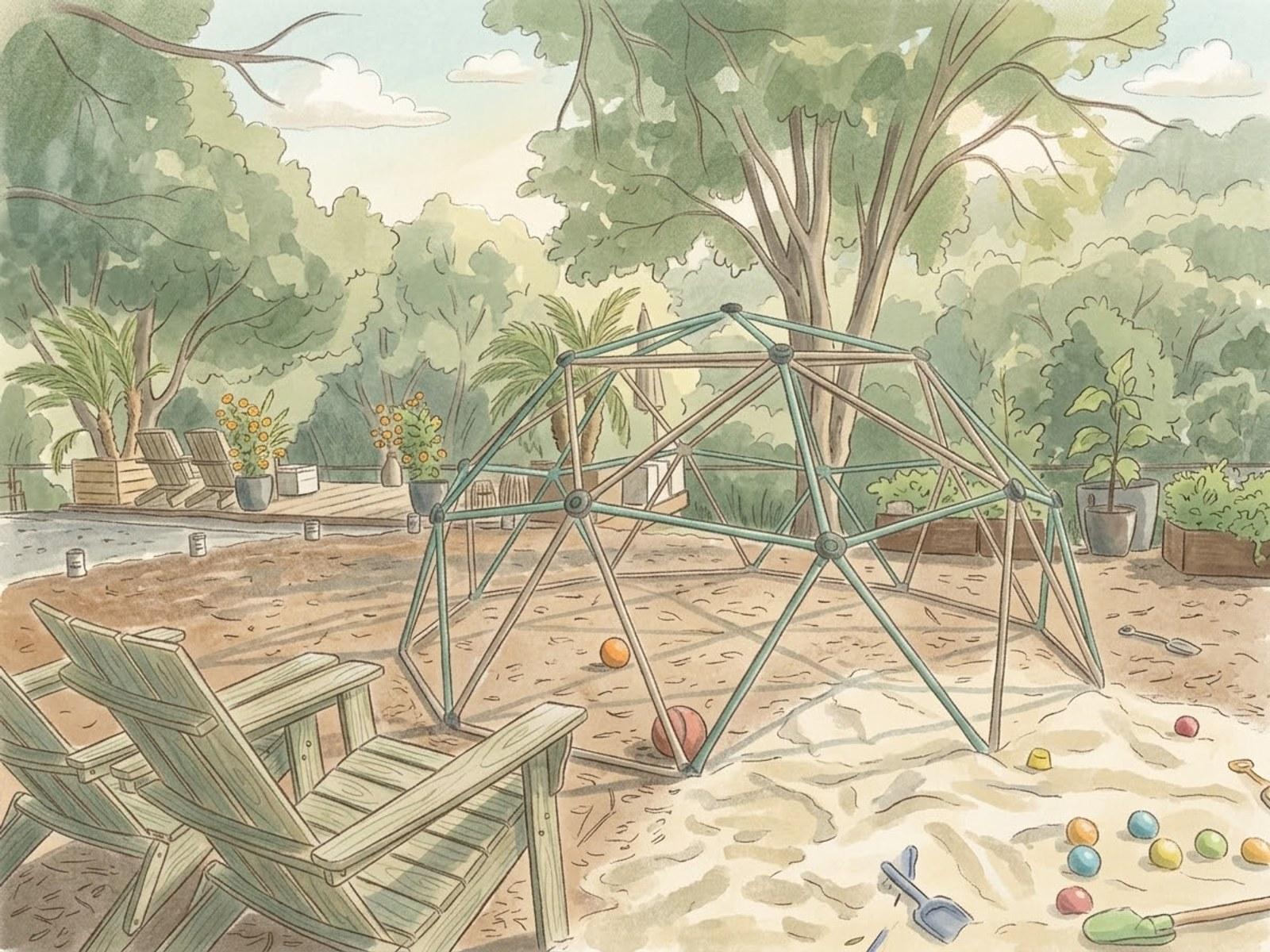
He needs big movement and real time outdoors just to feel settled in his body — not as a nice-to-have, but as what lets him handle the day, regulate his big emotions, and show up as himself. For years, that need and his safety were at war with each other. Open, natural spaces gave him what he craved but had no containment, so every outing meant scanning exits, staying two steps behind him, bracing for him to bolt. Structured places — gardens, playgrounds — weren’t built for him either, and were almost always too crowded for him to tolerate. So we lived in the gap between the two, watching him need something we couldn’t safely give him, over and over, for years.
The oldest
The opposite — cautious, careful, slow to try anything new. Food especially. But something happens in a garden that doesn’t happen at a dinner table: he’ll pick something himself, turn it over, decide on his own terms to try it. Every summer he tracks the peaches on our tree like the days can’t pass fast enough.
That’s not a problem we solved by finding the right place. It’s a problem my husband and I solved by building one ourselves — reshaping our own backyard, piece by piece, around what our kids actually needed.
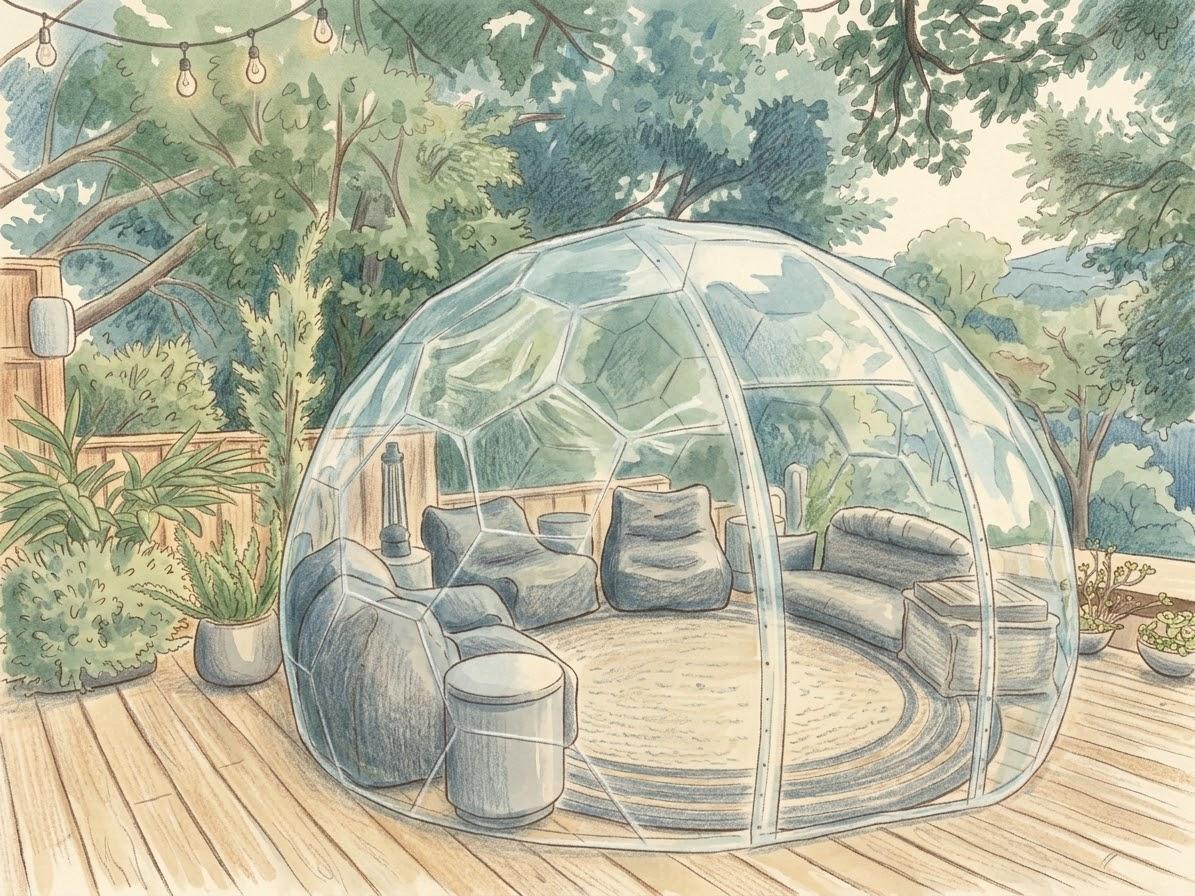
The dome started as a narrow fix — somewhere to sit on the days it’s too cold or too wet for the rest of the yard. It turned into the spot nobody wants to leave. Rain on clear plastic overhead, everyone piled onto the cushions inside — it’s the one part of the yard that doesn’t care what the weather’s doing.
For years, keeping my younger son safe outside meant watching him like a hawk — I couldn’t just be there with him, only manage him. In our backyard, for the first time, I could actually sit down. I could watch him play instead of watch him for danger. That shift — from bracing to actually enjoying my own child — might be the biggest gift this space gave our family, and it matters just as much to me as anything it gave the kids.
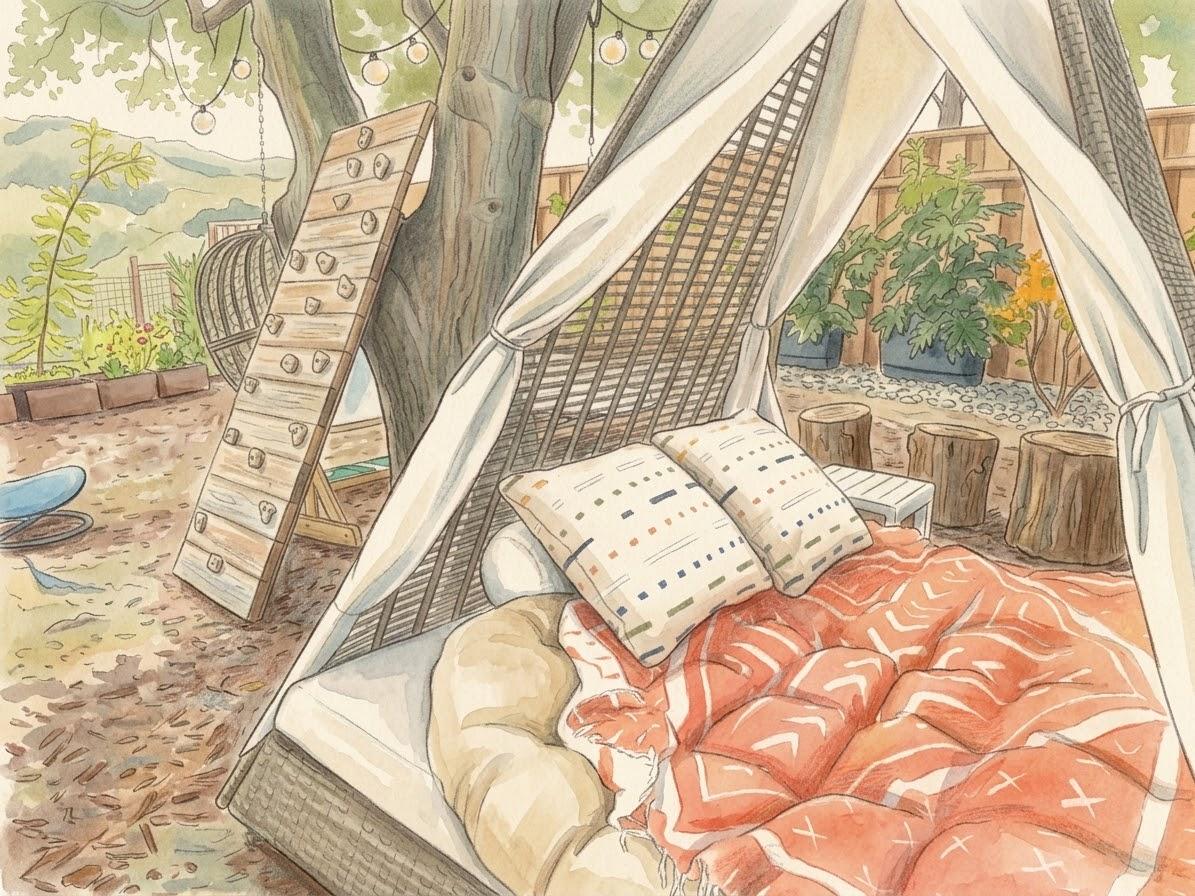
The change wasn’t only mine. Our youngest has gotten more settled just from having room to move safely. Our oldest has gotten braver, trying things now he never would have a year ago. And somewhere along the way, they started learning from each other too.
One afternoon, we noticed it wasn’t only our boys. Other kids who came to visit — kids who needed big movement, kids who usually found new places overwhelming — settled here too, in ways that sometimes surprised their own parents. That’s when it hit me: this backyard wasn’t only solving something for our family. It could do that for other families too.
What the research says
We didn’t know any of this when we started — we were just following what worked for our own two boys. But research consistently links time in nature to calmer nervous systems and better emotional regulation in kids, and shows that hands-on exposure to plants and growing food measurably increases kids’ willingness to try new things. It also backs up something we felt long before we could name it: kids do better when the adult with them is less stressed, not just when the kids themselves have a place to regulate — part of why a real spot for the parent is built into every plan here, not an afterthought. See our research page →
That’s the gap this app exists to close. Not everyone has a backyard big enough, or the years we spent figuring it out — and even for those who do, it takes energy and money most parents don’t have much of to spare. Raising a child with sensory needs is exhausting in ways that are hard to explain to anyone who hasn’t lived it; by the end of most days there’s little left over for a big backyard project. Every family deserves that same relief — not just a space where their child can regulate and grow, but a space where they get to stop watching like a hawk, too.
Whether your family uses the word neurodivergent, a specific diagnosis, or no label at all — this app doesn’t need any of that to work. It just needs your own words about your own kid.
And we’re not stopping at the backyard
The same ideas that transformed our own yard are the foundation for something bigger: Wonder Grove, a nature-based farm designed from the ground up around kids and the many different ways they experience the world.
See the vision for Wonder Grove →